Sunday, February 27, 2005

Dual Moments: 3D Computing

Nothing has made me smile as much recently as sitting in front of my computer with a pair of old-style red and blue 3D glasses looking at images from the Dual Moments website:


Almost like you could reach out and shoot him.


The frames from Citizen Kane are beauties.
Makes you wonder why such masters of field depth
as Greg Toland and Welles never did anything 3D.

There are more historical images and scenes from films on the site. In addition, there is a link to a guy willing to send you 3D glasses for free - no strings. (Found via MackWhite.com)

Friday, February 25, 2005

I Keep Remembering This Film That I Forgot


Chris Marker. La Jetée


A film of still images, like Chris Marker's La Jetée, each with a series of captions. Dynamic interplay between the word and the image, each fighting the other for meaning. The film is called Chimage. [ Note: what follows is a sorry re-construction of what I imagine the frames to have been. This does not even evoke the tone of the film. But it provides a fragmentary sense of it - as it resonates in my memory.]


Static interference. White signal, no noise.
Apocalytpic landscapes. A language I can't understand.
She says, "Where do elephants go when they die?"


As each new image is presented time slows down and the meaning sinks in. The imagining of the continuation of the narrative in the next film still/caption is vital and opens up deeper meanings in the current frame.


There beside Arch Stanton, we dug down.
"Is this the one?"
"Deeper. Dig deeper."


But as the film unfolds, as the old images dissolve and the new ones emerge, I forget what the last image was.


Gotterdammerung.
"It is like a dream within a dream."
"Yes," he replied. "But we are not dreaming."


There is only a lingering fog of memory that remains behind. And my frustration to remember is now added to the mystery and beauty of the next part of the film. Indeed, the narrative meaning of the film depends upon it.


"Where do statues go when they die?"
The marble head of a god
falling through my bloody hands
as if they were only tissue.


The still images and words flow by slower and slower and what I have forgotten increases exponentially. The cumulative effect creates a vast space charged with an enormous meaning of what has been forgotten. As the film seems to be coming to its end, I am filled with an aching nostalgia for this unremembered meaning.

The thing is: I saw this film. I remember being there while I watched it. But now there is nothing. And as you begin to question your memory in this way, it all fractals apart into an infinite regression of possibilities.

I ended up doing Google image searches for "chimage" and "chris marker" and various other related terms. What I found were only scattered fragments of the film:


Chris Marker. Silent Movie. 1994-95

Alain Resnais. Night and Fog / Nuit et Brouillard. 1955


Jan Svankmajer. The Ossuary.


But I never found the film itself. Only stills from the films of Chris Marker, Alain Resnais, Jan Svankmajer, Andrei Tarkovski, plus a host of other, seemingly random, images.


However, there are common threads: most of the images have come out of early 20th century Eastern Europe, centered around Czechoslovakia. I believe that whoever made "Chimage" was associated with the above directors, especially Marker, and had direct access to their films. There is also a strange Japanese element in the film. My suspicions are that the filmmaker now lives in Japan. And it is also just a hunch, but I believe he lives there as a fugitive. Perhaps he was associated with the Nazis or one of the oppressive Eastern European regimes. I don't know. That "Chimage" was created out of "stolen" images, I now have no doubt. Maybe this is why I cannot find anything about the film itself on the web, only the stolen fragments that went into its making.

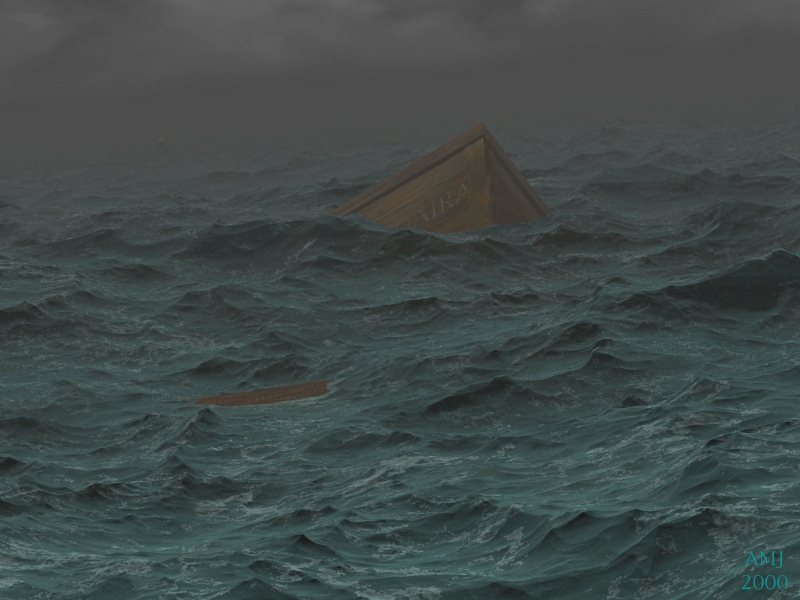
Regardless, none of this explains the curious forgetting effect that "Chimage" has had upon me. My thoughts constantly pick at this "emptiness-full-of-forgetting" within me. I feel like a shipwrecked survivor lost at sea in a lifeboat, gradually coming to the realization that I have amnesia. Bits and pieces of the ship litter the ocean around me, rising periodically to the surface from the sunken ship below. I can't figure out why I am in a boat in the middle of the ocean. Every new fragment of debris that I come across gives me a hint of who and where I am - or was. And the boat is filling up, settling ever deeper into the water.


Thursday, February 24, 2005

Vulnerology: The Problem Is This Bone Back Here That Refuses To Cooperate With Us


christ wound doubting thomas


Items collecting still around the essay, "No Wound Speaks For Itself" by Thyrza Nichols Goodeve in Artforum International, January 1992:


But what is pain? Pain rends. It is the rift. But it does not tear apart into dispersive fragments. Pain indeed tears asunder, it separates, yet so that at the same time it draws everything to itself. Its rending, as a separation that gathers, is at the same time that drawing which, like the predrawing of a plan or sketch, draws and joins together what is held apart in separation. Pain is the joining agent in the rending that divides and gathers. Pain is the joining of the rift. - Martin Heidegger, Unterwegs zur Sprache, 1959

From New American Radio:

"That is not a pretty cut..."

Display Wounds (1986) by Gregory Whitehead. A fictionalised monologue that addresses the "woundscape" of the human species in the wake of the history of technology through the brooding ruminations of a "vulnerologist"—a wound doctor whose slow and seductive voice unfolds the history of wounds, and the damage that extends even into the future, (mis)shaping the unborn. Punctuated by periodic suggestions from tango music ("Life is but a dry wound. Oh hot-blooded sadness, bleed away from me.") Commissioned by NEW AMERICAN RADIO

Listen here: http://www.turbulence.org:8080/ramgen/somewhere/display.rm

For wounds will always play the fool. Wounds are compulsive liars. The way the wound appears on the surface is rarely an accurate identification of the full dimensions of the wound.... Wounds cannot speak for themselves. And yet wounds are the evidence of stories that are of profound importance. If they are neglected, ignored or simply stiched up and forgotten, then we will get to the point where we can't look at ourselves. The wounds become deeper, less apparent, more structural, if you will, even genetic. Wounds that become apparent only in the second or third generation.


Plans for a Memory Theater


The theater of wounds is a memory theater. Our failure to look at wounds now, and interpret them now, may lead us to give birth to a society of monsters. - Whitehead, Display Wounds


From Lubeck's Dance of Death:

The Five Wounds of Christ

The dances of death sometimes show a fascination with God's wounds - like this example from the end of the first chapter in Des dodes dantz:

De vefte is de ewige dôt to ewiger tît;
Dârvor beware uns Jesus unser here
Dorch sinen dôt unde siner hilgen vîf wunden ere.

The fifth is the eternal death for eternal times;
[may] Jesus - our Lord - save us from this
through his death and his holy five wounds.


The Original Object Has Been Lost

The Enigma of Isidore Ducasse


Man Ray designed The Enigma of Isidore Ducasse in 1920, an unidentifiable object wrapped in a horse-blanket and secured with a piece of rope. The vague form of the object concealed by the blanket suggests a sewingmachine. Man Ray made the object for the express purpose of photographing it. The photograph appeared in Breton's introduction to the first number of the magazine La Révolution Surréaliste, which appeared in December 1924. The original object has been lost. - Description from Museum Boijmans Van Beuningen Rotterdam

What remains behind from the Fugitive Gods? What lacunae in our collective memories? What faded traces, broken bones, doors swinging off their hinges? Ghosts in the grammar. Butterflies nesting amidst the bones. "The vague form of the object concealed" suggests, not some threading machine, but a massive Skull resting upon the stone. Heiroglyphs mistaken for scars... the original object... there... with the breath upon the surface of the water fading... there... down there on the bottom... written in the sands... it resonates with time.


Wednesday, February 23, 2005

Gionarle Nuovo: István Orosz

It is always a good day when Mr. H updates the Giornale Nuovo. The latest features the Escher-like artist István Orosz. As usual, revalatory and amazing:


Be sure to also check out:
U T I S Z: The outstanding homepage of István Orosz http://www.utisz.net/