Tuesday, January 03, 2006

Notes On Difficulty


For those of you looking for pure B. Jones, you will have to forgive this bit of autobiography below. However, the revelation into Jones' personality provided by Steiner's essay was so profound for me that I thought it merited posting here.

To say that this last year has been difficult would be something of an understatement. In the retrospect that comes with the turning of the year, it seems the word difficult has been in my mouth more often than any other. And so it was with no fear of irony that I pulled George Steiner's On Difficulty and Other Essays from B. Jones' 'bookcase of the essentials' the other day. He had often referred me to the central essay, saying that it was a key to unlocking the dungeon of the twentieth century (or something like that).

Of course, as with so many essays, poems, books, songs, etc. that he constantly implored me to read, I had never read it. Turning now to the central essay and scanning the paragraphs, I came across this remarkable passage:

He will labour to undermine, through distortion, through hyperbolic augment, through elision and displacement, the banal and constricting determinations of ordinary, public syntax. The effects which he aims at can vary widely: they extend from the subtlest of momentary shocks, that unsettling of expectation which comes with a conceit in Metaphysical verse, to the bewildering obscurity of Mallarme and the modernists. The underlying manoeuvre is one of rallentando. We are not meant to understand easily and quickly. Immediate purchase is denied us. The text yields its force and singularity of being only gradually. In certain fascinating cases, our understanding, however strenuously won, is to remain provisional. There is to be an undecidability at the heart, at what Coleridge called the inner penetralium of the poem (there is a concrete sense in which the great allegories of ingress, of pilgrimage to the centre, such as the Roman de la rose and the Commedia, compel the reader to re-enact, in the stages of his reading, the adventure of gradual unfolding told by the poet).

And if that wasn't a perfect description of the life of B. Jones, then I didn't know what was. I even looked up the publication date (1978) to see if he hadn't come across it in his youth and decided to take it as a credo for living. Simply amazing. I truly regretted that I hadn't read it when he was alive so that I could've discussed it with him. As it was, I stopped everything that I was doing and sat down to read the entire essay.
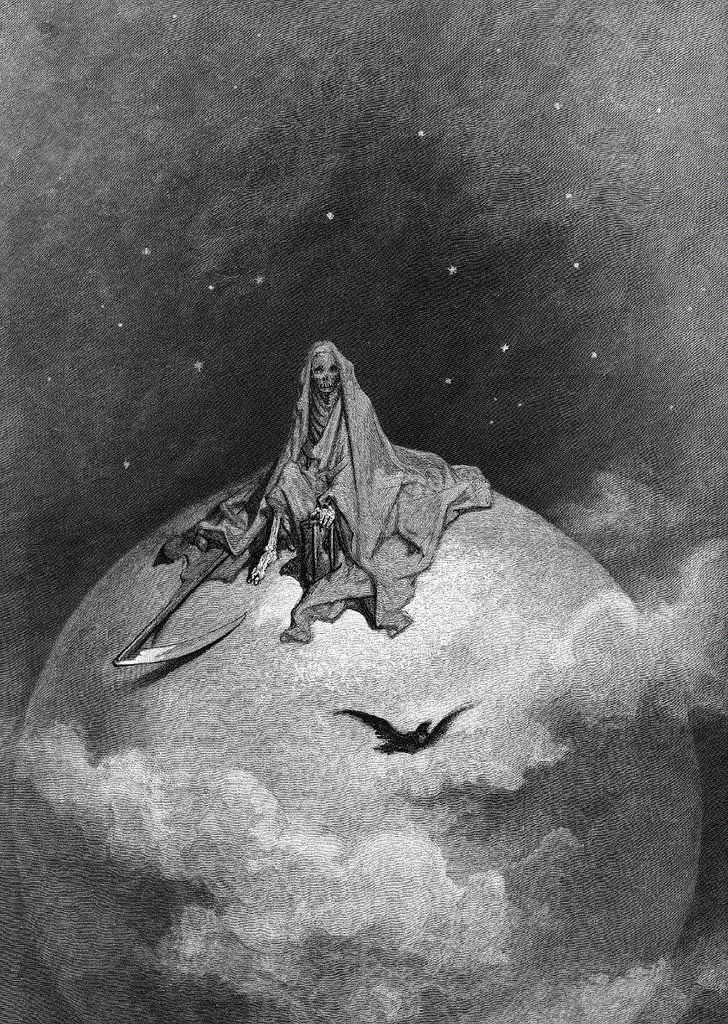


Essentially, Steiner breaks difficulty into four types: contingent, modal, tactical and ontological. (Now, hang on for a second). His primary focus is with poetry: why certain poems are so difficult to understand. But as I indicated above, what was most fascinating to me was the application of the types to the more elusive difficulties of a life. It was one of those reading experiences where you begin to smile with understanding and then end up laughing out loud at how each new paragraph unfolds. It was like a clockwork play, a perfect sonnet, a shimmering fugue quartet. I have read a fair amount of George Steiner but this was a virtuoso perfomance. In fact, it would be the first thing I would refer people to if they were unfamiliar with Steiner's work. (That Jones pushed Real Presences into my hands before this bewilders me.) So I recommend it. Highly.

I wish I could just post the entire essay here but I don't feel right about that. But here are the four types with passages from Steiner. The concern is poetry but turn them outwards, maybe to something or one that isn't necessarily a poem but is poetic - difficultly so - and see how appropriately they might apply.

Contingent Difficulties - Mostly things that have to be 'looked up'. Words that you don't know. Obscure references. Lexical issues. Answered with a dictionary, concordance, encyclopedia, etc..

In practice, the homework of elucidation may be unending. No individual talent or life-span, no collective industry, can complete the task. But not in theory, not formally. This is my point. Theoretically, there is somewhere a lexicon, a concordance, a manual of stars, a florilegium, a pandect of medicine, which will resolve the difficulty. In the 'infinite library' (Borges's 'Library that is the Universe') the necessary reference can be found. Walter Benjamin suggests that there are cruces and talismanic deeps in poetry which cannot be elucidated now or at all times; they were understood formerly, they may be rightly glossed 'tomorrow'. No matter: in some time, at some place, the difficulty can be resolved.

Modal Difficulties -
Takes more than looking up. A fundamental oddness, strangeness that you just don't get. Something like 'culture shock'. I am reminded of when I first read Joyce's Ulysses. I was young and just couldn't figure out what it was about. Of course, now it all seems so obvious that I wonder why I couldn't see it then.

[W]e may find ourselves saying 'this is a difficult poem' or 'I find it difficult to grasp, to place this poem' (the shift into a first-person register of experience is, here, significant) even where the lexicalgrammatical components are pellucid. We have looked up what there is to look up, we have confidently parsed the elements of phrase - and still there is opaqueness. In some way, the centre, the rationale of the poem's being, holds against us.

Tactical Difficulties
- Obscurities. Deliberately occult. Codes. Hidden allegories. Puzzles.

The poet may choose to be obscure in order to achieve certain specific stylistic effects. He may find himself compelled towards obliquity and cloture by political circumstances: there is a very long history of Aesopian language, of 'encoding' and allegoric indirection in poetry written under pressure of totalitarian censorship (oppression, says Borges, is the mother of metaphor). The constraints may be of a purely personal nature. The lover will conceal the identity of the beloved or the true condition of his passion.
This was all well and good. But Steiner opened up another aspect to me with the following passage:

It is the poet's aim to charge with supreme intensity and genuineness of feeling a body of language, to 'make new' his text in the most durable sense of illuminative, penetrative insight. But the language at his disposal is, by definition, general, common in use. Its similes are stock, its metaphors worn down to cliches. How can this soiled organon serve the most individual and innovative of needs? There have, throughout literary history, been logical terrorists who have taken the implicit paradox to its stark conclusion. The authentic poet cannot make do with the infinitely shop-worn inventory of speech, with the necessarily devalued or counterfeit currency of the every-day.

Just these phrases alone are enough to make me smile: "soiled organon", "logical terrorists", "shop-worn inventory of speech", "counterfeit currency of the every-day". Beautiful.

It was under this type of tactical difficulty that I came across the passage I initially quoted above.

Ontological Difficulties - Essential questions. The very existence, being, of the thing is in question here. Why was it created? Who is the audience? Why is there performance at all? I think of a spectrum from an autistic savant filling page after page with unreadable language to serial murderers 'decorating' their dungeons to Holy Men chanting mantras in isolated caves.

Because this type of difficulty implicates the functions of language and of the poem as a communicative performance, because it puts in question the existential suppositions that lie behind poetry as we have known it, I propose to call it ontological. Difficulties of this category cannot be looked up; they cannot be resolved by genuine readjustment or artifice of sensibility; they are not an intentional technique of retardation and creative uncertainty (though these may be their immediate effect). Ontological difficulties confront us with blank questions about the nature of human speech, about the status of significance, about the necessity and purpose of the construct which we have, with more or less rough and ready consensus, come to perceive as a poem.

This is certainly the most interesting type of difficulty. Perhaps the most vital to my outwardly formed interpretation. To exploring a life lived and died as a poem of sorts. I realize now that the difficulties that I have had in coming to terms with the death of B. Jones are mostly of the ontological type. His life was/is like a poem to me. And I guess the crux of the difficulty is in that tense change marked by /. Because I don't/didn't want the poem to ever end.

I will leave with two passages from Steiner as he says it so much better than me.

It is not so much the poet who speaks, but language itself: die Sprache spricht. The authentic, immensely rare, poem is one in which 'the Being of language' finds unimpeded lodging, in which the poet is not a persona, a subjectivity 'ruling over language', but an 'openness to', a supreme listener to, the genius of speech. The result of such openness is not so much a text, but an 'act', an eventuation of Being and literal 'coming into Being'. [...]

We bear witness to its precarious possibility of existence in an 'open' space of collisions, of momentary fusions between word and referent. The operative metaphor may be that crucial to Mallarme's famous L'absente de tous bouquets, to the modem physicist's determination of 'the unperceived event' in the cloud-chamber, and to Heidegger's equivocation on the 'absence in presence' (the play on Ab- and Anwesen). ln each case the observable phenomenon - the text - is the inevitable betrayal, in both senses of the term, of an invisible logic.


Friday, December 23, 2005

B. Jones Archive: The Vision of God Laughing

Once again, as part of the B. Jones Archive Project (and I will cease with these prefatory remarks when I feel more comfortable with my role as "curator" here), I present one of his drawings from the Incarnations of God series, The Vision of God Laughing.

The Vision of God Laughing, B. Jones
Ink on Paper, 1994


B. Jones' notes indicate that the initial inspiration for this design was the "triadic (fourth implied) image" of Shiva Maheshvara at the Elephanta Caves in India.

Shiva Maheshvara, Elephanta

However, the final design, he once told me, was a "blatant rip-off" of an 18th century silk embroidery of Avalokitesvara. I believe he saw this in New York. Of course I do not have access to that, but I did find this image from blotterart.net:

LSD Blotter Art of Avalokitesvara by Grey

The story was that Avalokitesvara vowed to save all sentient beings. Right when he thought he had completed his task, he found that there were still some unsaved beings. For an instant, he doubted his ability to fulfill his vow and his head shattered into a myriad of faces. However, the god to whom he had made the vow blessed him again and made him even more powerful, with all of the faces able to look in all directions, able to discern all unsaved beings and thus forever liberating Avalokitesvara from doubt.

Concerning the title, Jones told me that he first came across it in Kundera, but that it is an old Jewish idea: "What man calls thinking, God calls laughter". We had many discussions about this and there is much more to say in a later post.

B. Jones never posted any of his drawings here. I once asked him about this and he replied that he didn't see that they would be of much use to others, that they were like mirrors that only he could see into. I disagreed then and I disagree now.

Thursday, December 22, 2005

B. Jones Archive Project: Stamp Detournements

As part of the B. Jones Archive Project, I present some of his stamp detournements. As time and bandwidth permit, I will post more. In the last two years of his life, he created hundreds of these images, many of which he sent out on postcards with allusive quotations. He continually referenced Hakim Bey in this regard, often referring to his mailings as "poetic terrorism":

WEIRD DANCING IN ALL-NIGHT computer-banking lobbies. Unauthorized pyrotechnic displays. Land-art, earth-works as bizarre alien artifacts strewn in State Parks. Burglarize houses but instead of stealing, leave Poetic-Terrorist objects. Kidnap someone & make them happy. Pick someone at random & convince them they're the heir to an enormous, useless & amazing fortune--say 5000 square miles of Antarctica, or an aging circus elephant, or an orphanage in Bombay, or a collection of alchemical mss. Later they will come to realize that for a few moments they believed in something extraordinary, & will perhaps be driven as a result to seek out some more intense mode of existence.

- Slightly larger images on the click -


Thursday, December 15, 2005

R.I.P. - Charles "Bonesy" Jones

On the 15th of November of this year, my good friend and mentor, Charles "Bonesy" Jones passed away. He was 60 years old.

Just after the first of the year, while riding his bike at night, he was evidently struck by a car. No one is quite sure what happened. Mr. Jones had no memory of the event itself and even suggested that perhaps he had just fallen off his bike - over and over. (He referenced this, in his typically cryptic way, in his post from January 27th.)

However his injuries were fairly severe for a man his age: a major concussion and a badly separated shoulder. Initially this was thought to be the extent of it. But as the weeks passed and the wounds and shoulder healed, it became obvious that he was also suffering from some cognitive problems. Problems with memory and a progressive aphasia that further deteriorated into feverish dementias. His health declined rapidly over the summer. By October, it was clear to him that he did not have much longer to live.

He always hated doctors and hospitals and had no desire to spend his last days surrounded by either. He asked me if I would assist him in making "one last pilgrimage to the Desert". Of course, I agreed.

He died beside the fire on the cold but clear night of November 15th in the hills above the Chama River in New Mexico, not far from his beloved Monastery. His last words were: "In the end: bones..." - as fitting an epitaph, at least to my mind, as any Japanese Death poem.

I knew Mr. Jones for almost 20 years. No one has had a greater influence upon my life. As much as he prepared me over the years for "the day the bones step out of the skin", it still shocks and saddens me in every hour to realize that he is no more. The absence of his burning presence will haunt me for the rest of my days.

So I come to why I am writing this on his weblog: Mr. Jones graciously left me all of his, resolutely few, worldly possessions, including this computer and his extensive library. There are trunks full of writings, drawings, music and the mysterious ephemera of a rich and strange life. I have not been able to even look at it until just recently.

In an attempt to make some order out of it all, I turned this computer on the other day and began to organize his files. Amongst the labyrinthian folders inside folders, I stumbled upon one for this weblog and a series of notes and images that I imagine he intended someday to post. I remember him mentioning to me more than once how much he enjoyed his "occasional ranting and occluded confessions" related to The Laughing Bone.

It struck me that it might also be a good medium for me to exercise and exorcise a few of my own daemons. Additionally, I hope to publish selected fragments of interest from Mr. Jones. In this way, perhaps I can work through some portion of the grief and loss that seems to never diminish but only increase with each day I wake up to where he is no longer.

Sincerely,

Scot Casey

Friday, September 16, 2005

Though mounted in that saddle Homer rode

Into the Jaws of Death
Omaha Beach, 6 June 1944

Recently I was sent notice that the eminent translator, Stanley Lombardo, was going to perform selections from his work at the University of Texas in Austin. I shall certainly take the always perilous journey from Little Hope to Austin to attend. Several years ago, a good friend who had just completed a course of study in ancient Greek, excitedly pushed a copy of Lombardo's translation of the Iliad into my hands. "There is no such thing as translation, only rendering," he told me. "And this is the best rendering of Homer so far."

I was immediately struck by the cover photograph, "Into the Jaws of Death", 6 June 1944, of the Marines landing on the beaches of Normandy. I turned to the Translator's Preface and read:

A musician once asked Ezra Pound if there was anywhere one could get all of poetry, in the sense that one could get all of music in Bach. Pound's response was that if a person would take the trouble to really learn Greek, he could get all of it, or nearly all of it, in Homer. If Pound is right, and I think he is, then the real work of the Homeric translator is clear: to produce a version that is responsive not only to meaning and nuance but also to overall poetic effect, a version that has as much poetry as the original text, the translator's talent, and the current literary situation will yield. This requires loyalty to the essential qualities of Homeric poetry - its directness, immediacy, and effortless musicality - more than replication of the verse's technical features (although these must at least be suggested). In the end, it is the greatness and reach of Homer as a poet that the translator must confront. Accuracy and nuance are attainable through scholarship and good writing; technical problems admit various solutions; but what we love is the poet's voice, and finding its tone, rhythm, and power is the heart of Homeric translation.
Lombardo's "rendering" was, as you might imagine from those prefatory remarks, excellent. I had read Robert Fagles translations of the Iliad and the Odyssey not long before and found Lombardo's to be much more immediate - in the sense that, even with its near colloquial modernity, it felt closer to Homer; rather, who I imagined Homer to be.

Down there at the roots of the Western Canon is such a strange beast.

In his essay, Homer in English, George Steiner writes:

To borrow an image from plant genetics: the sequence of translations from Homer provides a unique radioactive tracer. By its luminescent progress, we can follow the development of the language, of its vocabularies, syntax and semantic resources, from root to stem, from its stem to its multiple branches and leaves. Every model of English lexical and grammatical observance is visible in this chain: all the way from the most ornate and experimental, as in Chapman or Joyce, to the 'basic English' purpose in I. A. Richards's narration of the fury of Achilles.....

This vivacity if structural illumination, of dynamic legibility, as in a radioactive tracer coursing through organic tissue, springs from the nature of translation itself. For it is through the process of translation that language is made eminently self-aware. Translation constrains it to formal and diachronic introspection, to an explicit investment and enlargement of its historical, colloquial and metaphorical instruments. Simultaneously, translation puts language under the pressure of its limitation. It will solicit modes of perception and designation which that language had left underdeveloped, or had altogether discarded. An act of translation draws up the balance-sheet, as it were, for the target language.
Which brings Christopher Logue's translations (accountings) to the front and center. In the author's note to War Music: An Account of Books 1-4 and 16-19 of Homer's Iliad, he states:

Rather than a translation in the accepted sense of the word, I was writing what I hoped would turn out to be a poem in English dependent upon whatever, through reading and through conversation, I could guess about a small part of the Iliad, a poem whose composition is reckoned to have preceded the beginnings of our own written language by fifteen centuries.

My reading on the subject of translation had produced at least one important opinion: "We must try its effect as an English poem," Boswell reports Johnson as saying; "that is way to judge of the merit of a translation."
Logue's translation is, as Steiner remarks, incandescent. White-hot flashing neon that is not always the best modality for expressing a "loyalty to the essential qualities of Homeric poetry": but still illuminating. I thoroughly enjoyed it. Logue's "balance-sheet" for the language opened up aspects of the inner drama of the text that I had never quite caught before. The immediacy here wasn't so much one of getting close to Homer as it was one of getting close to the core humanity of the poem.

A few comparisons between the Lombardo and Logue translations:

Rage:
Sing, Goddess, Achilles' rage.
Black and murderous, that cost the Greeks
Incalcuable pain, pitched countless souls
Of heroes into Hades' dark,
And left their bodies to rot as feasts
For dogs and birds, as Zeus' will was done.
- Lombardo, Book 1, 1-7

Picture the east Aegean sea by night,
And on a beach aslant its shimmering
Upwards of 50,000 men
Asleep like spoons beside their lethal fleet.
- Logue, Book 1, 1-4

"This time we will save you, mighty Achilles,
This time- but your hour is near. We
Are not to blame, but a great god and a strong Fate.
Nor was it slowness or slackness on our part
That allowed the Trojans to despoil Patroclus.
No, the best of gods, fair-haired Leto's son,
Killed him in the front lines and gave Hector the glory.
As for us, we could outrun the West Wind,
Which men say is the swiftest, but it is your destiny
To be overpowered by a mortal and a god.

Xanthus said this; then the Furies stopped his voice
And Achilles, greatly troubled, answered him:

"I don't need you to prophesy my death,
Xanthus. I know in my bones I will die here
Far from my father and mother. Still, I won't stop
Until I have made the Trojans sick of war."

And with a cry he drove his horse to the front.
- Lombardo, Book 19, 149-154

And as it ran the white horse turned its tall face back
And said:
"Prince,
This time we will, this time we can, but this time cannot last.
And when we leave you, not for dead, but dead,
God will not call us negligent as you have done."

And Achilles, shaken, says:
"I know I will not make old bones."

And laid his scourge against their racing flanks.

Someone has left a spear stuck in the sand.
- Logue, Book 19, Pax
A while back. Jim Lewis profiled Christopher Logue in Slate on the occasion of the publication of All Day Permanent Red: An Account of the First Battle Scenes of Homer's Iliad. Is is an informative and amusing piece. I particularly enjoyed this passage (the line, "a man whose eccentricities border on madness", is perfect):

Certainly, Logue's resume is piebald, at best. Among other things, he wrote the screenplay for Ken Russell's Savage Messiah, a biopic about the French sculptor Henri Gaudier-Brzeska; he is credited as playing the role of the "spaghetti-eating fanatic" in Terry Gilliam's Jabberwocky, and as recently as 2001, he had a bit part in The Affair of the Necklace, a historical drama starring Hilary Swank. Moreover, the flap copy on All Day Permanent Red (whose title comes from a Revlon lipstick ad) mentions the availability of a seven-CD set of Logue's work titled Audiologue, which on closer inspection proves to include 500 minutes of readings, some of them set in the late 1950s to jazz. For better or worse, this is not the sort of activity that helps establish someone as a Major Poet, and you might be excused for dismissing Logue as a dilettante - or, at least, a man whose eccentricities border on madness.

And yet.... He is an extraordinary writer, the books are brilliant, his poetry strong, witty, and intelligent. He is not a charlatan: not at all. To be sure, his Iliad rings in a different key than most contemporary poetry, which often seems dominated by, on the one hand, obscure and inward-looking lyrics, and on the other, by the self-indulgent, tin-eared efforts that emerge from poetry slams. Logue is something else; narrative and frank, but his Homer is as alive as any more modish author.

I'll leave the last words to Stephane Mallarme:

We were the last romantics -- chose for theme
Traditional sanctity and loveliness;
Whatever's written in what poets name
The book of the people; whatever most can bless
The mind of man or elevate a rhyme;
But all is changed, that high horse riderless,
Though mounted in that saddle Homer rode
Where the swan drifts upon a darkening flood.

Hell mouth, as figured in the Roxburghe Ballads.
University of Victoria Library.

P.S. There never can be a last word can there? I was curious as to see if there was a reference for "into the jaws of death" and, of course, it was Tennyson, The Charge of the Light Brigade.

1.
Half a league, half a league,
Half a league onward,
All in the valley of Death
Rode the six hundred.
"Forward, the Light Brigade!
"Charge for the guns!" he said:
Into the valley of Death
Rode the six hundred.


2.
"Forward, the Light Brigade!"
Was there a man dismay'd?
Not tho' the soldier knew
Someone had blunder'd:
Their's not to make reply,
Their's not to reason why,
Their's but to do and die:
Into the valley of Death
Rode the six hundred.


3.
Cannon to right of them,
Cannon to left of them,
Cannon in front of them
Volley'd and thunder'd;
Storm'd at with shot and shell,
Boldly they rode and well,
Into the jaws of Death,
Into the mouth of Hell
Rode the six hundred.


4.
Flash'd all their sabres bare,
Flash'd as they turn'd in air,
Sabring the gunners there,
Charging an army, while
All the world wonder'd:
Plunged in the battery-smoke
Right thro' the line they broke;
Cossack and Russian
Reel'd from the sabre stroke
Shatter'd and sunder'd.
Then they rode back, but not
Not the six hundred.


5.
Cannon to right of them,
Cannon to left of them,
Cannon behind them
Volley'd and thunder'd;
Storm'd at with shot and shell,
While horse and hero fell,
They that had fought so well
Came thro' the jaws of Death
Back from the mouth of Hell,
All that was left of them,
Left of six hundred.


6.
When can their glory fade?
O the wild charge they made!
All the world wondered.
Honor the charge they made,
Honor the Light Brigade,
Noble six hundred.