Showing posts with label LSD. Show all posts

Friday, April 16, 2010

What Albert Hofman Showed Me: Revelations In A Roman Cauliflower


[ source ]


 [ source ]

    • Albert Hofmann: LSD - My Problem Child


      Although I had firmly resolved to make constant notes, it now seemed to me a complete waste of time, the motion of writing infinitely slow, the possibilities of verbal expression unspeakably paltry - measured by the flood of inner experience that inundated me and threatened to burst me. It seemed to me that 100 years would not be sufficient to describe the fullness of experience of a single minute. At the beginning, optical impressions predominated: I saw with delight the boundless succession of rows of trees in the nearby forest. Then the tattered clouds in the sunny sky rapidly piled up with silent and breathtaking majesty to a superimposition of thousands of layers - heaven on heaven - and I waited then expecting that up there in the next moment something completely powerful, unheard of, not yet existing, would appear or happen - would I behold a god? But only the expectation remained, the presentiment, this hovering, "on the threshold of the ultimate feeling." . . . Then I moved farther away (the proximity of others disturbed me) and lay down in a nook of the garden on a sun-warmed wood pile - my fingers stroked this wood with overflowing, animal-like sensual affection. At the same time I was submerged within myself; it was an absolute climax: a sensation of bliss pervaded me, a contented happiness - I found myself behind my closed eyes in a cavity full of brick-red ornaments, and at the same time in the "center of the universe of consummate calm." I knew everything was good - the cause and origins of everything was good. But at the same moment I also understood the suffering and the loathing, the depression and misunderstanding of ordinary life: there one is never "total," but instead divided, cut in pieces, and split up into the tiny fragments of seconds, minutes, hours, days, weeks, and years: there one is a slave of Moloch time, which devoured one piecemeal; one is condemned to stammering, bungling, and patchwork; one must drag about with oneself the perfection and absolute, the togetherness of all things; the eternal moment of the golden age, this original ground of being - that indeed nevertheless has always endured and will endure forever - there in the weekday of human existence, as a tormenting thorn buried deeply in the soul, as a memorial of a claim never fulfilled, as a fata morgana of a lost and promised paradise; through this feverish dream "present" to a condemned "past" in a clouded "future." I understood. This inebriation was a spaceflight, not of the outer but rather of the inner man, and for a moment I experienced reality from a location that lies somewhere beyond the force of gravity of time.

    • Huxley on Drugs and Creativity


      Well, there's always a complete memory of the experience. You remember something extraordinary having happened. And to some extent you can relive the experience, particularly the transformation of the outside world. You get hints of this, you see the world in this transfigured way now and then -- not to the same pitch of intensity, but something of the kind. It does help you to look at the world in a new way. And you come to understand very clearly the way that certain specially gifted people have seen the world. You are actually introduced into the kind of world that Van Gogh lived in, or the kind of world that Blake lived in. You begin to have a direct experience of this kind of world while you're under the drug, and afterwards you can remember and to some slight extent recapture this kind of world, which certain privileged people have moved in and out of, as Blake obviously did all the time.

    • From Lama Anagarika Govinda:Creative Meditation and Multidimensional Consciousness


      It was only with the advent of the Kalacakra School in the tenth century A.D. that religious seers and thinkers realised the profound mystery which is hidden under the conventional notion of time, namely the existence of another dimension of consciousness, the presence of which we feel darkly and imperfectly on the plane of our mundane experience. Those, however, who crossed the threshold of mundane consciousness in the advanced stages of meditation, entered into this dimension, in which what we feel as time was experienced not merely as a negative property of our fleeting existence, but as the ever present dynamic aspect of the universe and the inherent nature of life and spirit, which is beyond being and non-being, beyond origination and destruction. It is the vital breath of reality-reality, not in the sense of an abstraction, but as actuality of all levels of experience- which is revealed in the gigantic movements of the universe as much as in the emotions of the human heart and the ecstasies of the spirit. It is revealed in the cosmic dance of heavenly bodies as well as in the dance of protons and electrons, in the “harmony of the spheres” as well as in the “inner sound” of living things, in the breathing of our body as well as in the movements of our mind and the rhythm of our life.


      [source


      Reality, in other words, is not stagnant existence of “something”; it is neither “thingness” nor a state of immovability (like that of an imaginary space), but movement of a kind which goes as much beyond our sense-perceptions, as beyond our mathematical, philosophical and metaphysical abstractions. In fact, space (except the “space” that is merely thought of) does not exist in itself, but is created by movement; and if we speak of the curvature of space, it has nothing to do with its prevailing or existing structure (like the grain in wood or the stratification of rocks), but with its antecedent, the movement that created it. The character of this movement is curved, i.e. concentric, or with a tendency to create its own center- a center which may again be moving in a bigger curve or circle, etc.
      Thus, the universe becomes a gigantic mandala or an intricate system of innumerable mandalas (which, according to the traditional Indian meaning of the word, signifies a system of symbols, based on a circular arrangement or movement, and serves to illustrate the interaction or juxtaposition of spiritual and cosmic forces.) If, instead from a spatial point of view, we regard the universe from the standpoint of audible vibration or sabda, “inner sound,” it becomes a gigantic symphony. In both cases all movements are interdependent, interrelated, each creating its own center, its own focus of power, without ever losing contact with all the other centers thus formed.


       [source]


      “Curvature” in this conception means a movement which recoils upon itself (and which thus possesses both constancy and change, i.e. rhythm) or at least has the tendency to lead back to its origin or starting-point, according to its inherent law. In reality, however, it can never return to the same point in space, since this movement itself moves within the frame of a greater system of relationships. Such a movement combines the principle of change and nonreversibility with a constancy of an unchangeable law, which we may call its rhythm. One might say that this movement contains an element of eternity as well as an element of transiency, which latter we feel as time.

       [source]


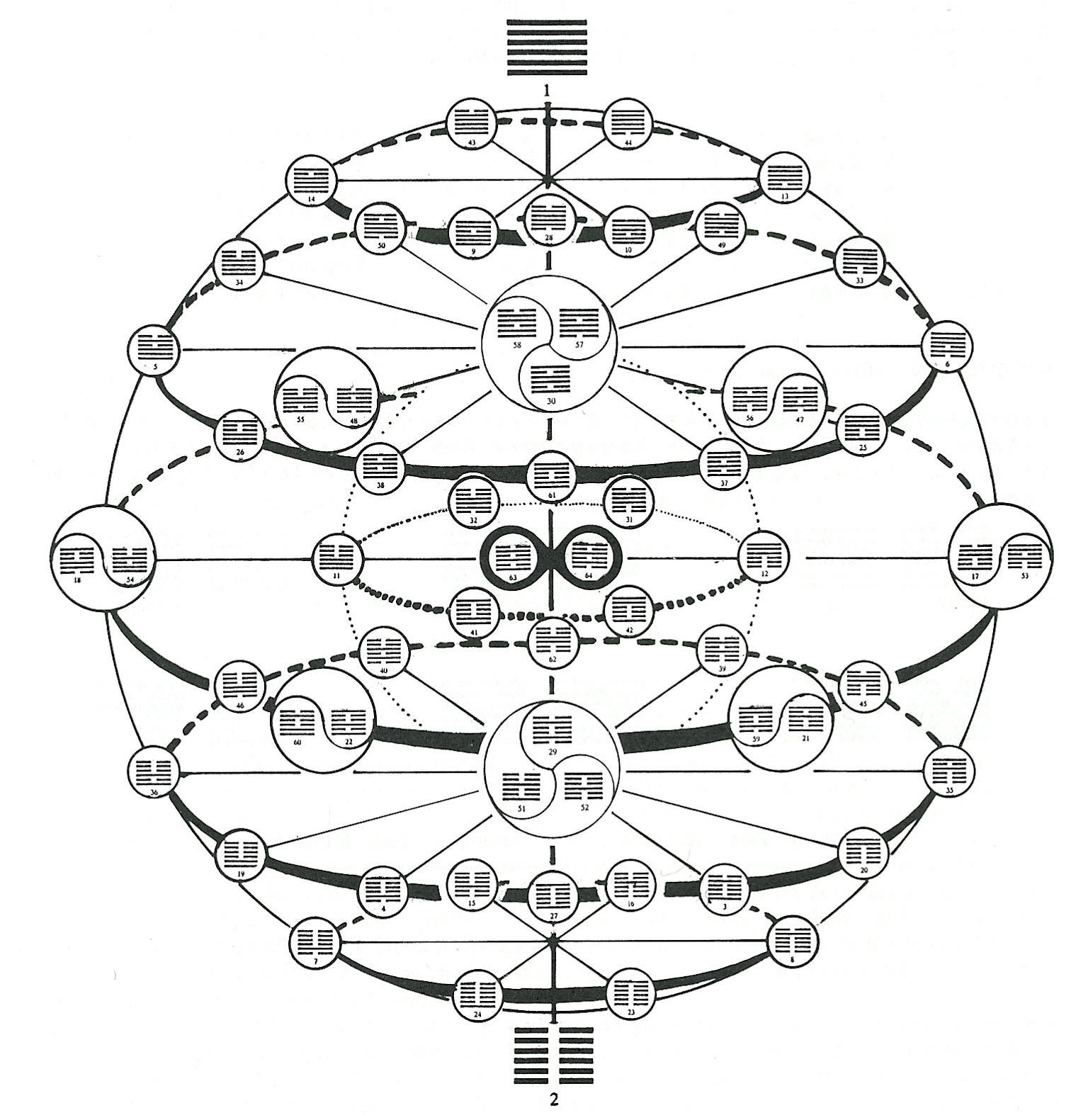
      Both time and space are the outcomes of movement, and if we speak of the “curvature of space” we should speak likewise of the “curvature of time,” because time is not a progression in a straight line- of which the beginning (the past) is lost forever and which pierces into the endless vacuum of an inexorable future- but something that recoils upon itself, something that is subject to the laws of ever-recurrent similar situations, and which thus combines change with stability. Each of these situations is enriched by new contents, while at the same time, retaining its essential character. Thus we cannot speak of a mechanical repetition of the same events, but only of an organic rebirth of its elements, on account of which even within the flux of events the stability of law is discernable. Upon the recognition of such a law which governs the elements (or the elementary forms of appearance) of all events, is the basis upon which the I-Ching or “The Book of Changes,” the oldest work of Chinese wisdom, is built.


       [source]


      Perhaps this work would better be called “The Book of the Principles of Transformation” because it demonstrates that change is not arbitrary or accidental but dependent on laws, according to which each thing or state of existence can only change into something already inherent in its own nature, and not into something altogether different. It also demonstrates the equally important law of periodicity, according to which change follows a cyclic movement (like the heavenly bodies, the seasons, the hours of the day, etc.), representing the eternal in time and converting time quasi into a higher space-dimension, in which things and events exist simultaneously, though imperceptible to the senses. They are in a state of potentiality, as invisible germs or elements of future events and phenomena that have not yet stepped into actual reality. (p256-60)

       [source]

      This sameness- or as we may say just as well, this eternal presence of the “Body of the Law” (dharmakaya), which is common to all Buddhas, to all Enlightened Ones- is the source and spiritual foundation of all enlightenment and is, therefore, placed in the center of the Kalacakra-Mandala, which is the symbolical representation of the universe.

       [source]


      Kala means “time” (also “black”), namely the invisible, incommensurable dynamic principle, inherent in all things and represented in Buddhist iconography, as a black, many-headed, many-armed, terrifying figure of simultaneously divine and demoniacal nature. It is “terrible” to the ego-bound individual, whose ego is trampled underfoot, just as are all the gods, created in the ego’s likeness, who are shown prostrate under the feet of this terrifying figure. Time is the power that governs all things and all being, a power to which even the highest gods have to submit.


      Cakra means “wheel,” the focalised or concentric manifestation of the dynamic principle in space. In the ancient tradition of Yoga the Cakra signifies the spatial unfoldment of spiritual or universal power, as for instance in the cakras or psychic centers of the human body or in the case of the Cakravartin, the world-ruler who embodies the all-encompassing moral and spiritual powers.

       [source]


      In one of his previous books on Buddhist Tantrisim, H.V. Guenther compares the Kalacakra symbol to the modern conception of the space-time continuum, pointing out, however, that in Buddhism it is not merely a philosophical or mathematical construction, but is based on the direct perception of inner experience, according to which time and space are inseparable aspects of reality.
      “Only in our minds we tend to separate the three dimensions of space and the one of time. We have an awareness of space and an awareness of time. But this separation is purely subjective. As a matter of fact, modern physics has shown that the time dimension can no more be detached from the space dimension than length can be detached breadth and thickness in an accurate representation of a house, a tree, or Mr X. Space has no objective reality except as an order or arrangement of things we perceive in it, and time has no independent existence from the order of events by which we measure it.” (Guenther, Yuganaddha, The Tantric View of Life, 1952)
      An experience of reality (and that is all we can talk of, because “reality as such” is another abstraction) cannot be defined but only circumscribed, i.e., it cannot be approached by the straight line of two-dimensional logic, but only in a concentric way, by moving around it, approaching it not only from one side, but from all sides, without stopping at any particular point. Only in this way can we avoid a one-sided and perspectively foreshortened and distorted view, and arrive at a balanced, unprejudiced perception and knowledge. This concentric approach (which moves closer and closer around its object, in order finally- in the ideal case- to become one with it) is the exact opposite of the Western analytical and dissecting way of observation: it is the integral concentration of inner vision (dhyana). (p263) 
      That the gods of Buddhist iconography and their symbols and functions do not belong in the realm of metaphysics, but to that of psychology, has been correctly pointed out by C.G. Jung in his Commentary on the Secret of the Golden Flower. Speaking of the great Eastern philosophers, he says: “I suspect them of being symbolical psychologists, to whom no greater wrong could be done than to take them literally. If it were really metaphysics that they mean, it would be useless to try to understand them. But if it is psychology, we can not only understand them, but we can greatly profit greatly by them, for then the so-called ‘metaphysical’ comes within the range of experience. If I accept the fact that a god is absolute and beyond all human experiences, he leaves me cold. I do not affect him, nor does he affect me. But if I know that a god is a powerful impulse in my soul, at once I must concern myself with him, for then he can become important… like everything belonging to the sphere of reality.” (Jung, Psyche and Symbol, 1958)

    Friday, March 12, 2010

    Notes on Ergot Poisoning: Red flowers were blossoming from their bodies


    Sergei Sharov | The Temptations of St. Anthony | 1969


    From The Telegraph.co.ok: French bread spiked with LSD in CIA experiment

    The mystery of Le Pain Maudit (Cursed Bread) still haunts the inhabitants of Pont-Saint-Esprit, in the Gard, southeast France.

    On August 16, 1951, the inhabitants were suddenly racked with frightful hallucinations of terrifying beasts and fire.

    One man tried to drown himself, screaming that his belly was being eaten by snakes. An 11-year-old tried to strangle his grandmother. Another man shouted: "I am a plane", before jumping out of a second-floor window, breaking his legs. He then got up and carried on for 50 yards. Another saw his heart escaping through his feet and begged a doctor to put it back. Many were taken to the local asylum in strait jackets.

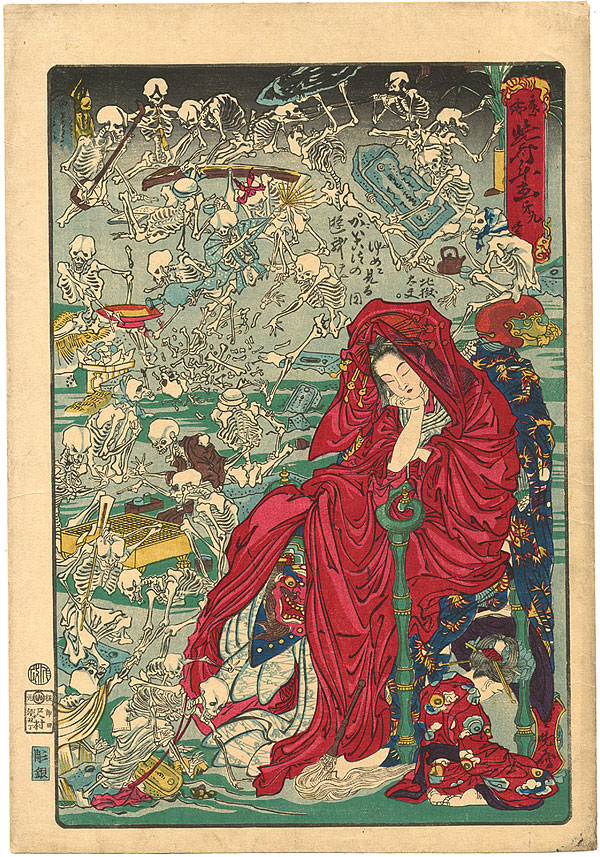
    Time magazine wrote at the time: "Among the stricken, delirium rose: patients thrashed wildly on their beds, screaming that red flowers were blossoming from their bodies, that their heads had turned to molten lead."

    [ source ]

    From Wikipedia: France:

    Les cinq hypothèses

    Près de soixante ans après les évènements de Pont-Saint-Esprit, on ne sait toujours pas à quoi les attribuer. Cliniquement, les symptômes étaient ceux d'une forme mixte d'ergotisme ou « mal des ardents ».

    • L'hypothèse "ergot de seigle" : En 1951, le corps médical avait estimé que le « pain maudit » aurait pu être contaminé par de l'ergot de seigle (Claviceps purpurea), un champignon parasite des graminées. Mais ce diagnostic n'a jamais pu être prouvé.
    •  L'hypothèse "Panogen (r)" : On a aussi pensé à une intoxication par le dicyandiamide de métyl-mercure, un produit contenu dans un fongicide ("Panogen (r)") utilisé pour la conservation des grains ayant servi à faire la farine. La justice retient cette hypothèse, mais cette piste a fini par être abandonnée suite à une thèse en pharmacie soutenue en 1965. Elle est également mise en doute par Steven Kaplan.
    • L'hypothèse "mycotoxines" : En 1982, le Pr Moreau, toxicologue spécialiste des moisissures, a émis l'hypothèse que l'intoxication de Pont-Saint-Esprit aurait pu provenir de mycotoxines, substances produites par des moisissures pouvant se développer dans les silos à grain. Les effets toxiques des de mycotoxines sont aujourd'hui bien connus en médecine vétérinaire mais étaient quasiment inconnus en 1951.
    • L'hypothèse "agène" : Outre l'hypothèse des mycotoxines, Steven Kaplan retient celle d'un blanchiment artificiel du pain à l'aide d'un composé chimique pathogène : l'agène
    •  L'hypothèse "LSD 25" : Dans un livre publié aux États-Unis en octobre 2009 et traitant des opérations de la CIA durant la Guerre froide, le journaliste américain Hank P. Albarelli Jr. avance que la CIA aurait testé le LSD comme arme de guerre par pulvérisation aérienne sur la population spiripontaine. Dans son n°559 du 18 février 2010, l'hebdomadaire nîmois La Gazette fait état de cette thèse, suivi par d'autres médias. Les hallucinations qui accompagnent les convulsions de l'ergotisme sont similaires à celle déclenchées par le LSD (l'acide lysergique, base du LSD, est synthétisé à partir de l'ergot de seigle). La faille de cette hypothèse est que le LSD ne donne pas de troubles digestifs (nausées, brûlures d'estomac, vomissements).


    From Shoa Planetaire:

    Un journal français écrivait à l’époque des événements bizarres : « Ce n’est ni du Shakespeare, ni de l’Edgar Poe. C’est hélas la triste réalité tout autour de Pont-Saint-Esprit et de ses environs, où se déroulent des scènes d’hallucinations terrifiantes. Ce sont des scènes tout droit sorties du Moyen Âge, des scènes d’horreur et de pathos, pleines d’ombres sinistres. » Le magazine étasunien Time, dont l’éditeur Henry Luce était étroitement lié aux activités de propagande de la CIA dans les années 50, écrivait : « Parmi les affligés, grandissait le délire : les patients se débattaient sauvagement sur leur lit, en hurlant que des fleurs rouges s’épanouissaient sur leur corps, que leurs têtes se transformaient en plomb fondu. L’hôpital de Pont-Saint-Esprit a signalé quatre tentatives de suicide. »


    From the informative and fascinating Ergot of Rye: History:

    Due to the cold and wet years that occurred in 1348-50, in certain areas of Europe, grain crops, which were the staple for Europe at this time, were thought to have been contaminated with T-2 or related toxins that damaged the immune systems of both rats and humans. The damage to the immune systems of both rats and human is is believed to be one the contributing factors that led to the high mortality during the Bubonic Plague. However, other causes of depressed immune systems, other than fungal in origin, may also have occurred at this time.

    When the greatest mortality due to the Bubonic Plague had passed, areas that were hard hit with the plague did not recover. This puzzled historians, although there were still some incidents of famine and diseases, after the plague, generally there was not a lack of food nor a great deal of disease since the populations in many areas had been drastically reduced by the plague. However, there was still a population depression even a generation after the plague, and longer . Populations in many areas had still not reached levels that were present before the plague. After the plague, the winters were unusually cold. This affected the diet of the poor more than the wealthy. In those years where the winters were cooler, Rye would be more likely to survive than wheat. This made it more likely that Rye would be consumed, and while the Rye survived the cold temperatures, the plants were traumatized and were more susceptible to infections by Ergot. Evidence that Ergot poisoning was occurring was based on reports of nervous system disorders. In summer of 1355, there was an epidemic of “madness” in England. People believed that they saw demons. In 1374, a wet year, marked by a lack of food, there was an outbreak of hallucinations, convulsions and compulsive dancing in the Rhineland. Some people imagined they were drowning in a stream of blood. In addition to nervous system disorders such as those described above, Ergot poisoning is also known to reduce fertility and cause spontaneous abortions. With the greater consumption of Rye, coupled with consumption of grains infected with T-2 and related mycotoxin that is believed to have shortened the consumer's life span by compromising their immune system, were possibly the reason for the population depression during this period of time. It would not be until almost the 15th. Century that an upward trend in population would begin. [...]


    Ergotism occurred in 1926-27 in Russia, with 10,000 reported cases, in England in 1927, with 200 cases, among central European Jewish immigrants and the last known example occurred on August 12, 1951. On that day, Jean Vieu, a medical doctor in the little town of Pont-St. Esprit, in Provence, France, was the first to discover the outbreak while puzzling over two cases of patients who complained of intense pain in the lower abdomen. At first Dr. Vieu believed these cases to be acute appendicitis, but the symptoms that his patience exhibited were not those of this particular ailment. Instead, Some of these symptoms included low body temperatures and cold fingertips. Even stranger were the wild babbling and hallucinations. By August 13th., Dr. Vieu had a third patience with these symptoms. His concern of these patients led him to meet with two other colleagues and together, the three doctors had twenty patients with the symptoms just described.

    By August 14th., the town's hospital was now filled with more patients with the same symptoms and 70 homes were required as emergency wards. When possible, victims were tied to their beds, those that escaped were running mad and frantic through the streets. All available strait jackets were rushed to the town to restrain the victims of this sickness. If there were any town's people of Pont-St.-Esprit that were not terrified by this time, they became so when they learned of a demented, eleven year old boy, who had tried to strangle his own mother. Paranoia soon spread throughout the town, rumors soon spread that this wave of dementia was due to a mass poisoning that had been carried out by the local authorities.

    Meanwhile, the doctors, were working diligently to discover the cause of this dementia. That this was caused by some sort of food poisoning, they were certain. However, what had all these people consumed? The doctors searched the houses of the afflicted and found only one common food item. All the victims had consumed wheat bread from the same baker. Samples of the bread were taken and sent to Marseilles. When the results from the analysis of the bread samples were completed, tests indicated that it contained approximately twenty alkaloid poisons, and that they had all apparently came from the same source. The origin of the alkaloids was identified as those belonging to the fungus causing ergot of the rye plant.

    It would be four more weeks before the whole story concerning the contamination of the bread would unfold. Beyond the Auvergne Mountains, where wheat is grown, an unethical farmer had apparently sold contaminated rye grain to a miller who had mixed it with wheat and grounded it into flower. The miller then shipped the flour to Pont-St.-Esprit, to the baker who was also collaborating with the farmer and miller. It was their greed that was responsible for over two hundred cases of alkaloid poisoning, thirty two cases of insanity and four deaths.

    [ source ]


    From the 1951 article in The British Medical Journal: Ergot Poisoning at Pont St. Esprit (.pdf):

    Logorrhoea, psychomotor agitation, and absolute insomnia always presaged the appearance of mental disorders. Towards evening visual hallucinations appeared, recalling those of alcoholism. The particular themes were visions of animals and of flames. All these visions were fleeting and variable. In many of the patients they were followed by dreamy delirium. The delirium seemed to be systematized, with animal hallucinations and self-accusation, and it was sometimes mystical or macabre. In some cases terrifying visions were followed by-fugues, and two patients even threw themselves out of windows. The delirium was of a confusional kind which could be interrupted for some moments by strong stimulation. Every attempt at restraint increased the agitation. In severe cases muscular spasms appeared, recalling those of tetanus,but seeming to be less sustained and less painful. During this stage, sweating was abundant, and the temperature somewhat raised. The duration of these periods of delirium was very varied. They lasted several hours in been treated and four cases of the latter. In some patients, in others they still persist.

    [ source ]


    From the PBS Series: Secrets of the Dead: The Witches Curse:

    When Linnda Caporael began nosing into the Salem witch trials as a college student in the early 1970s, she had no idea that a common grain fungus might be responsible for the terrible events of 1692. But then the pieces began to fall into place. Caporael, now a behavioral psychologist at New York's Rensselaer Polytechnic Institute, soon noticed a link between the strange symptoms reported by Salem's accusers, chiefly eight young women, and the hallucinogenic effects of drugs like LSD. LSD is a derivative of ergot, a fungus that affects rye grain. Ergotism -- ergot poisoning -- had indeed been implicated in other outbreaks of bizarre behavior, such as the one that afflicted the small French town of Pont-Saint-Esprit in 1951.

    But could ergot actually have been the culprit? Did it have the means and the opportunity to wreak havoc in Salem? Caporael's sleuthing, with the help of science, provided the answers. 

    Ergotism is caused by the fungus Claviceps purpurea, which affects rye, wheat and other cereal grasses. When first infected, the flowering head of a grain will spew out sweet, yellow-colored mucus, called "honey dew," which contains fungal spores that can spread the disease. Eventually, the fungus invades the developing kernels of grain, taking them over with a network of filaments that turn the grains into purplish-black sclerotia. Sclerotia can be mistaken for large, discolored grains of rye. Within them are potent chemicals: ergot alkaloids, including lysergic acid (from which LSD is made) and ergotamine (now used to treat migraine headaches). The alkaloids affect the central nervous system and cause the contraction of smooth muscle -- the muscles that make up the walls of veins and arteries, as well as the internal organs.

    Toxicologists now know that eating ergot-contaminated food can lead to a convulsive disorder characterized by violent muscle spasms, vomiting, delusions, hallucinations, crawling sensations on the skin, and a host of other symptoms -- all of which, Linnda Caporael noted, are present in the records of the Salem witchcraft trials. Ergot thrives in warm, damp, rainy springs and summers. When Caporael examined the diaries of Salem residents, she found that those exact conditions had been present in 1691. Nearly all of the accusers lived in the western section of Salem village, a region of swampy meadows that would have been prime breeding ground for the fungus. At that time, rye was the staple grain of Salem. The rye crop consumed in the winter of 1691-1692 -- when the first unusual symptoms began to be reported -- could easily have been contaminated by large quantities of ergot. The summer of 1692, however, was dry, which could explain the abrupt end of the "bewitchments." These and other clues built up into a circumstantial case against ergot that Caporael found impossible to ignore. 

    [ source ]


    From the New York Times, October 22, 1998:

    DELAIN, France, Oct. 21 - An exorcist has been called in to rid the Delain village church of devils, which he said had sent candlesticks flying, forcing ecclesiastical authorities to close the building until further notice.

    The exorcist, the Rev. Max de Wasseige, who was called in by the Archbishop of Besancon to drive out the devils, said, ''I saw candlesticks flying about with my own eyes.''

    The trouble began last Thursday in this village in eastern France when volunteers moved the altar by a few inches to make more space for a visiting symphony orchestra.

    Witnesses said afterward that a candle went flying, splitting in two, and that statuettes and vases were broken inexplicably. Also the altar was moved by four inches, apparently unaided.

    The Mayor of Delain, Thierry Marceaux, said, ''There was no collective hallucination, or 50 people will have to be sent to the lunatic asylum.''

    He said that the orchestra gave its concert normally on Sunday, but that the devils resumed their work on Monday, even though the altar had been put back in its place.

    The Roman Catholic Church, like many Christian churches, teaches that the Devil is real and evil spirits exist. But modern theologians have been playing down Satan's influence as they have accepted psychological and psychiatric explanations of abnormal behavior.

    Niklaus Manuel | Temptation of Saint Anthony | 1520


    Thanks to Tiffany for the lead.


    Thursday, April 19, 2007

    Bicycle Day


    From Wikipedia: History of LSD:

    Three days later, on April 19, 1943 (known as Bicycle Day), Dr. Hofmann intentionally ingested 250 µg of LSD, which he hypothesized would be a threshold dose, based on other ergot alkaloids. In reality, this is a fairly substantial dose and the threshold would actually be around 25 µg. Hoffman wrote:

    "By now it was already clear to me that LSD had been the cause of the remarkable experience of the previous Friday, for the altered perceptions were of the same type as before, only much more intense. I had to struggle to speak intelligibly. I asked my laboratory assistant, who was informed of the self-experiment, to escort me home. We went by bicycle, no automobile being available because of wartime restrictions on their use. On the way home, my condition began to assume threatening forms. Everything in my field of vision wavered and was distorted as if seen in a curved mirror. I also had the sensation of being unable to move from the spot. Nevertheless, my assistant later told me we had traveled very rapidly."

    Dr. Hofmann summoned a doctor, who could find no abnormal physical symptoms other than extremely dilated pupils. After spending several hours terrified that his body had been possessed by a demon, that his next door neighbour was a witch, and that his furniture was threatening him, Dr. Hofmann feared he had become completely insane.

    Tuesday, February 20, 2007

    The Sibyl of Cumae from her shrine sang out her riddles

    Book VI: The World Below of Virgil's Aeneid
    Fitzgerald Translation, As Rendered by Termites

    "If only the golden bough
    Might shine for us in such a wilderness!"


    From the Journals of B. Jones:


    I’m standing next to a mountain
    And I chop it down with the edge of my hand

    Well, I’m standing next to a mountain

    And I chop it down with the edge of my hand

    I pick up all the pieces and make an island

    Might even raise a little sand

    - Jimi Hendrix, “Voodoo Child (Slight Return),” Electric Ladyland (1968).

    4 July 1994 – I was working at Europa Books on the Drag in Austin, Texas. The store was closed for the holiday. I took the opportunity to take 4 hits of LSD.

    In the back of the store was a cinderblock storeroom where I had set up a sort of office for myself. There was a hammock, a radio, many wooden shelves of books and a small desk. I often spent time back there after-hours. I liked it especially because there were no windows.

    You could get fairly isolated back there.

    So there I was full of LSD, with a cooler full of Shiner Bock, listening to Hendrix and reading Heidegger. I was having a good time – a very good time.

    At some point, I pulled a copy of Virgil’s Aeneid from a stack nearby to reference some vital point now forgotten and was surprised to discover that the stack had become infested with termites.

    I dropped the book and watched in hallucinogenic amazement as the tiny insects worked to salvage their thrown-down world.

    Carefully opening the book again, I found that they had burrowed through the pages. Sections of the poem’s text were split by small tunnels lined with dirt. Beautiful. I was fascinated and slightly horrified. It seemed to me that there were millions of termites all of a sudden, I checked around my shoes, my hands and arms. I wondered if they had colonized every book in the back room? Fragments of the text caught my eye as the insects worked with precision to reconstruct a new universe.

    The letters creating Aeneas seemed to scatter off the page, termites carrying him away in their mouths. “This is for the Queen…”


    Book IV-VI of Virgil's Aeneid
    Fitzgerald Translation, As Rendered by Termites

    "There were the sentences
    In which the Sibyl of Cumae from her shrine
    Sang out her riddles, echoing in the cave,
    Dark sayings muffling truths, the way Apollo
    Pulled up her raging, or else whipped her on,
    Digging the spurs beneath her breast."


    If you are curious as to where Jones went with all of this nonsense:
    http://www.laughingbone.com/skeletonmachine