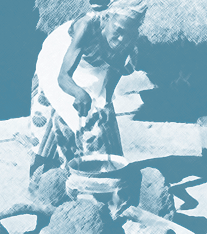
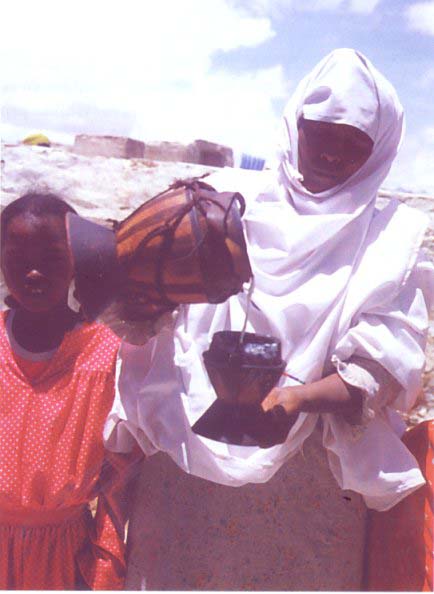
Recently, I've been collecting images of women pouring. Something about that act of pouring. Resonate. Acquiring gravity for me. Centering.
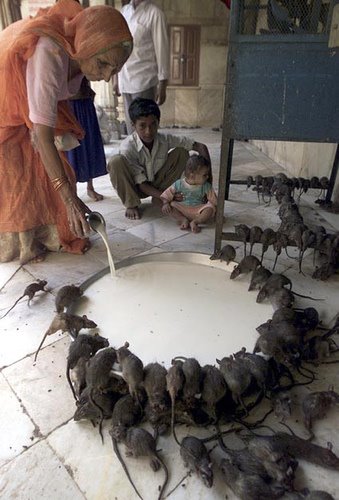
Searching through aspects of the phrase "the perfect day", I came across this image:

There was certainly a sexual element to it. But more: a quality of plenty, of abundance, surplus. I began to consider the meaning of the Act of Pouring. And, the feminine attachments to this act. Economic and gender interpretations seemed to merely cloud the surface. Underneath there was a quality of radiance, an over-flowing. Witness
Vermeer's Milkmaid:
 The Milkmaid
Jan Vermeer van Delft, 1658-1660
Outside of the famous and undeniable radiance of the painting itself, the Milkmaid's
act of pouring has its own internal luminescence. Specifically a woman in the act of pouring liquid from one vessel to another. It was absolutely hypnotic to me. And I couldn't precisely figure it out. So I collected more images:
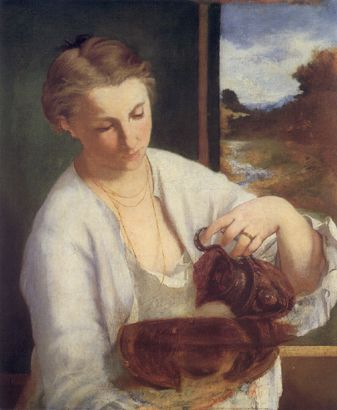
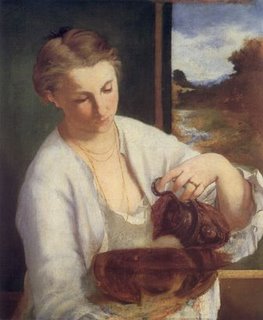 Eduard Manet, Woman Pouring Off Water (1858)
Each one exceptionally beautiful. Then, I came across these images from the major arcana of the Tarot with various interpretations:

From
Wikipedia:
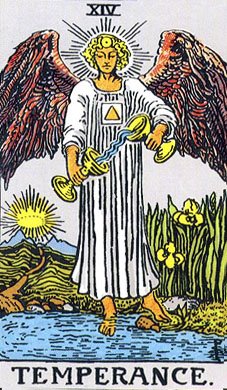
Temperance (Italian: La Temperanza) is a Major Arcana Tarot card, numbered VI or VII in the oldest Italian decks, but XIV in the Tarot de Marseille and in most contemporary decks. In the Thoth Tarot and decks influenced by it, this card is called Art rather than Temperance.
Temperance is almost invariably depicted as a person pouring liquid from one receptacle into another. Historically, this was a standard symbol of the virtue temperance, representing the dilution of wine with water. In many decks, the person is a winged angel, usually female or androgynous, and stands with one foot on water and one foot on land.

Temperance? What was the connection between the feminine act of pouring and temperance? Why was temperance represented as an act of pouring between one vessel and another?
What is suggested is an act of allotment, a distribution of substance, a pouring off of a "proper share". Implications of balance, discipline and ritual are just underneath. The female who pours knows precisely how much there is in total, where the plenty ends, and how much to pour off each time. But at the core of it, and this is what has fascinated me, was the idea of the gift. Being the holder of the vessel, she knows what "plenty" means. She is the keeper of the abundance, the radiance. It is her understanding that determines "what shall be given to each"; what the Gift shall be. These sentences just pound upon the biggest drum in my brain. Voodoo thoughts.
And this leads me to Lewis Hyde's excellent book,
The Gift: Imagination and the Erotic Life of Property:
That art that matters to us - which moves the heart, or revives the soul, or delights the senses, or offers courage for living, however we choose to describe the experience - that work is received by us as a gift is received. Even if we have paid a fee at the door of the museum or concert hall, when we are touched by a work of art something comes to us which has nothing to do with price.
A gift that cannot be given away ceases to be a gift. The spirit of a gift is kept alive by its constant donation. If this is the case, then the gifts of the inner world must be accepted as gifts in the outer world if they are to retain their vitality. Where gifts have no public currency, therefore, where the gift as a form of property is neither recognized nor honored, our inner gifts will find themselves excluded from the very commerce which is their nourishment. Or, to say the same thing from a different angle, where commerce is exclusively a traffic in merchandise, the gifted cannot enter into the give-and-take that ensures the livelihood of their spirit.
There is much more to say about Art and the Gift. About the Myth of Scarcity. About the commodification of art. And what role Temperance has to play in all of it. It is worth remarking in passing that the Temperance card in the Tarot was one called Art. Perhaps in another post.
What is important to say here and now though is that when one is given a magnificent gift, one that exceeds all possibility of ever being "re-turned", then the qualities of temperance become vital. It is the correct mixing of metals that tempers a sword into greater strength. It is proper balance of mental states that defines our psychological temper. Temperance grants us understanding to know the balance between the give-and-take, what it means to for-give and for-get, what the true meaning of the gift is. Under the burden of a magnificent gift, it is simply crucial to maintain temper.
The Fiery Angel stands before you pouring everything, Everything, from one vessel into another. That you might receive something from that is a True Gift. And I believe with all of my being that in the end, you MUST find a way to give it back - in spite of, even because of, any temporal law or repercussion. Else, you lose everything that makes your life worth living. Literature, poetry, painting, sculpture, music will come to mean nothing. You die inside. The Culture dies.
George Steiner, in a
Guardian review about Vermeer, remarked that:
There is sadness as well, and an intimation of irreparable loss. What would Vermeer make of the brutal trash, of the self-advertising cliches which currently pass for art? Of the fake machine-guns, ripped sacking or virtually empty galleries in the New Tate? Just what has made impossible for us the creation, the communication of the weight, of the radiance of things and of their human custodians so abundant in Vermeer? Whom are we fooling but ourselves?
An Indian woman pours an offering of milk for rats
at the Karni Mata Hindu temple in the town of Deshnoke
in India's northwestern state of Rajasthan.
REUTERS/Kamal Kishore